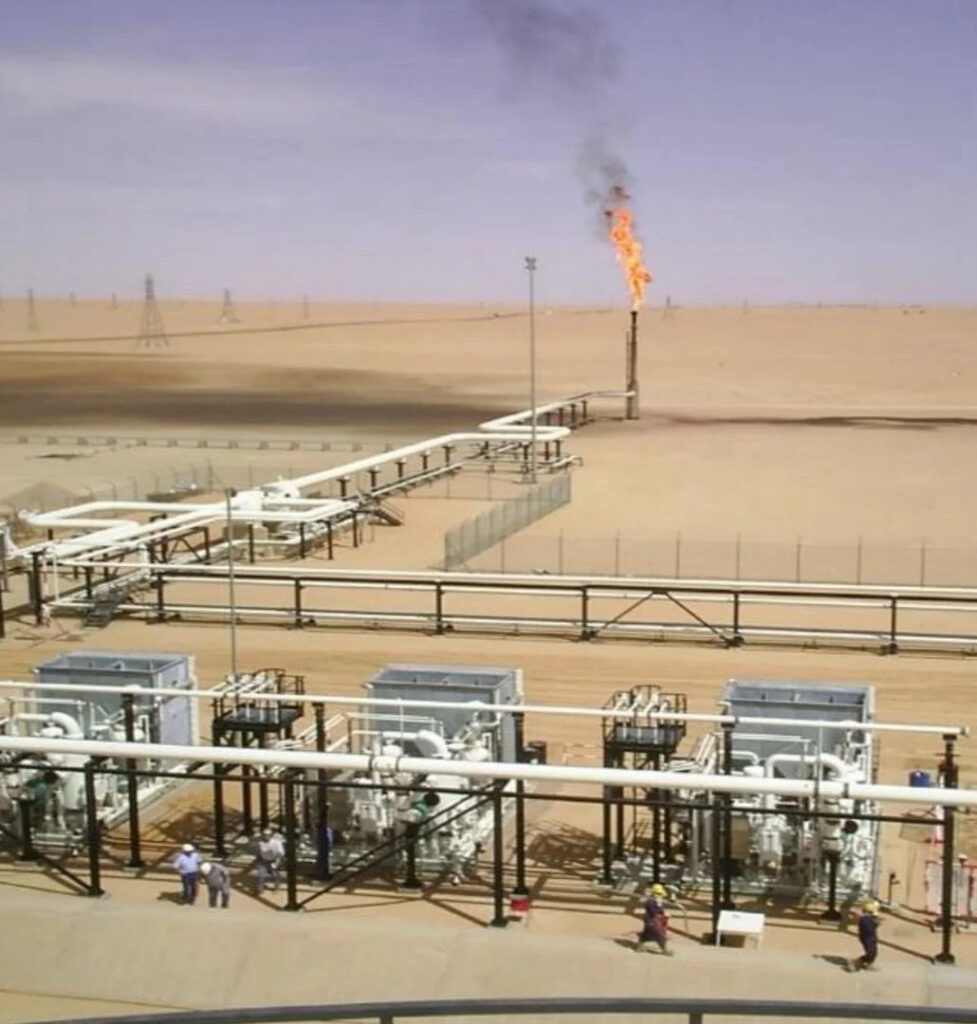
The NOC, in collaboration with its subsidiaries and in coordination with its specialised committees and company liaisons, has reached a significant milestone by rolling out a set of strategic projects designed to reduce gas flaring and optimise its use.
These efforts led to the implementation of several important projects across various oil companies, particularly three key initiatives at Sirte Oil Company for Production and Manufacturing of Oil and Gas.
The first project focused on pumping condensate from the Hatiba field into a 16-inch pipeline. Previously, the condensate was produced and stored in a 30-inch low-pressure pipeline. This setup caused significant amounts of the condensate to turn into gas within the pipeline, leading to it being flared off.
The second project successfully facilitated the transfer and pumping of around 60 million cubic feet of gas each day. This included 38 million cubic feet daily from the Ellaheeb field and 22 million cubic feet per day from the Ragouba field, all directed into the main 30-inch pipeline that feeds into the coastal gas network. This achievement was possible thanks to technical modifications that permitted the transfer of these volumes instead of flaring them.
The third project focused on reviving a gas separation system at the Ellaheeb field that had been out of service for a long time. This system has the capacity to separate about 12 million cubic feet of gas per day at high pressure, which is then utilized for gas lift operations within the field.
The fourth project, carried out by Sarir Oil Operations, successfully made technical upgrades to the Gas Processing Plant (GUP) and commissioned a gas compressor in Contract Area 91, near Jikharra. These improvements allowed for the processing of around 25 million cubic feet of gas per day, along with the production of 1,800 barrels of condensate daily.
Similarly, Waha Oil Company launched its fifth project, which successfully cut gas flaring by around 20 million cubic feet per day at the North Defa field. This was achieved through maintenance and commissioning work on the field’s gas compressor.
As a result, the NOC is on track to cut natural gas flaring by nearly 100 million cubic feet per day by 2025. This gas will be used to supply the coastal network that powers plants and petrochemical facilities, improving operational efficiency and maximizing the use of national resources.
Furthermore, these projects have helped reduce gas emissions from flaring operations, benefiting environmental protection and lessening the negative impacts of oil activities. This highlights the NOC’s commitment to adopting global best practices in sustainability and clean energy, while striving for a balance between economic returns and environmental responsibility.
The NOC is committed to reaching new milestones, with a goal of reducing gas flaring by about 120 million cubic feet per day by 2026, and achieving a 60% reduction in flaring by the end of 2030. This initiative is part of a detailed action plan aligned with the goals of the 2030 initiative, which includes clear timelines for launching additional projects, expanding environmental efforts, and investing in innovative technologies to minimize gas losses and enhance resource utilization efficiency.
These achievements demonstrate the NOC’s ongoing commitment to environmental protection, the promotion of sustainability principles, and improved energy efficiency. This aligns with Libya’s significant move to join the Paris Agreement on Climate Change in 2021, clearly signaling the country’s readiness to engage actively in international efforts to combat climate change.
Find out more from Inside Oil and Gas here…